
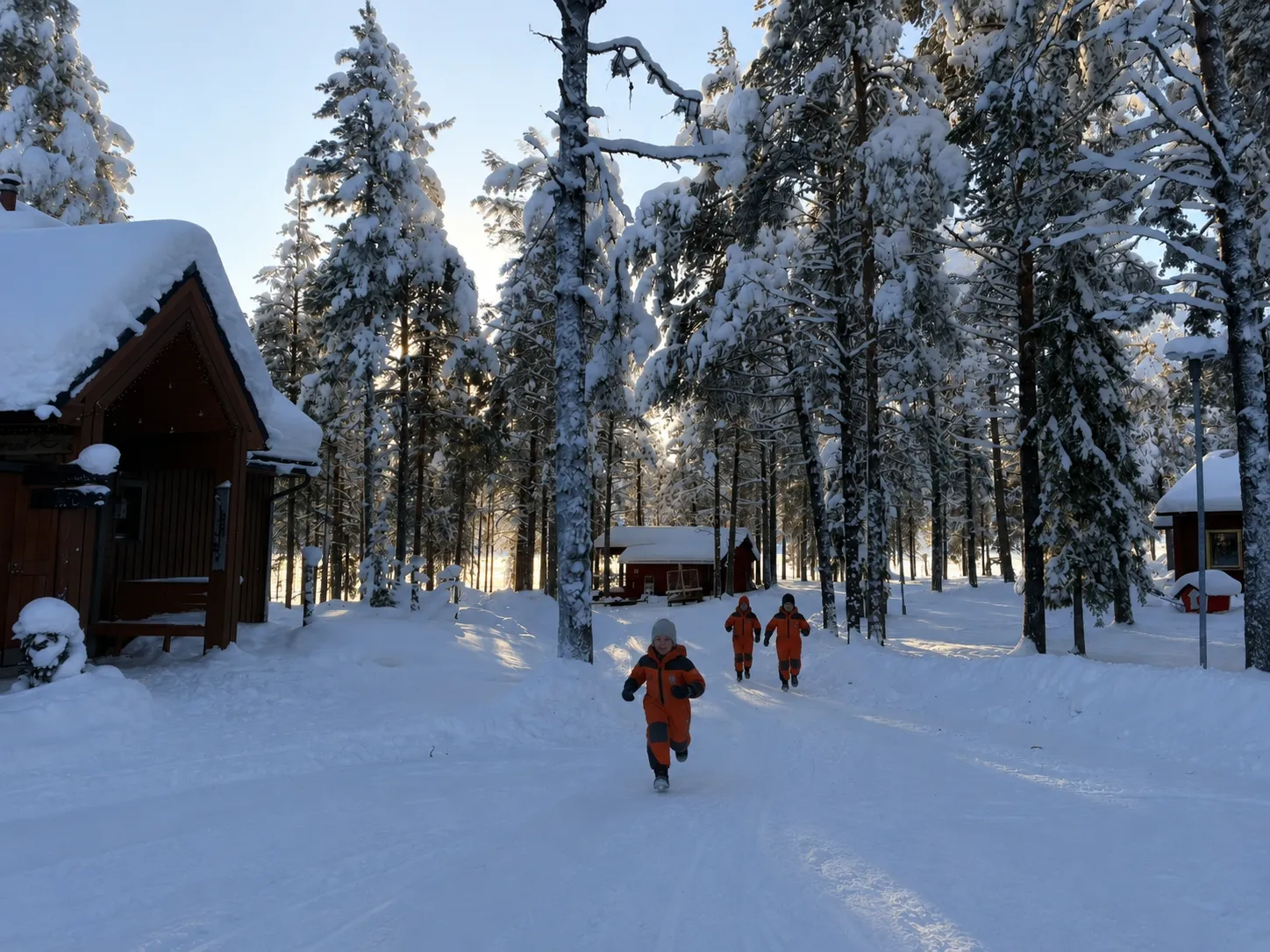
Does a Lapland holiday work for a family where someone finds walking difficult, uses a wheelchair, or simply cannot manage long distances in the cold? It is one of the questions we hear most often from families planning a trip together, especially when grandparents are coming along, and the honest answer is encouraging: yes, for many families it works well, provided the right questions are asked early. Finland takes accessibility seriously, and a resort-based snow holiday can be far more manageable than people expect.
The families who have the best experience are not the ones who hope for the best. They are the ones who ask precise questions before booking, so nothing about the accommodation, the transfers or the activities comes as a surprise on arrival. This guide collects the questions worth asking, whoever in your group has mobility needs. It is practical planning guidance rather than medical advice; for anything health-related, your own clinician or therapist remains the right person to ask.
Start With Needs, Not Labels
Accessibility is not a single standard. A cabin that suits someone who walks with sticks may be unusable for a wheelchair user, and a snowy path that defeats a standard self-propelled wheelchair can be fine for a sturdier chair pushed by a strong adult. So rather than asking a provider the yes-or-no question, describe the actual situation: how far the person can comfortably walk, whether a few steps are manageable, what equipment they use, what tires them and what they want to be part of.
Specialist Arctic operators increasingly plan exactly this way, starting from the traveller's real needs rather than a category, and it is the information that lets a resort give you honest answers instead of vague reassurance. Share it in your first message when you request a quote; it shapes everything from which cabin you are allocated to how activity timings are arranged.
Accommodation: Ask About Steps, Doors and Bathrooms
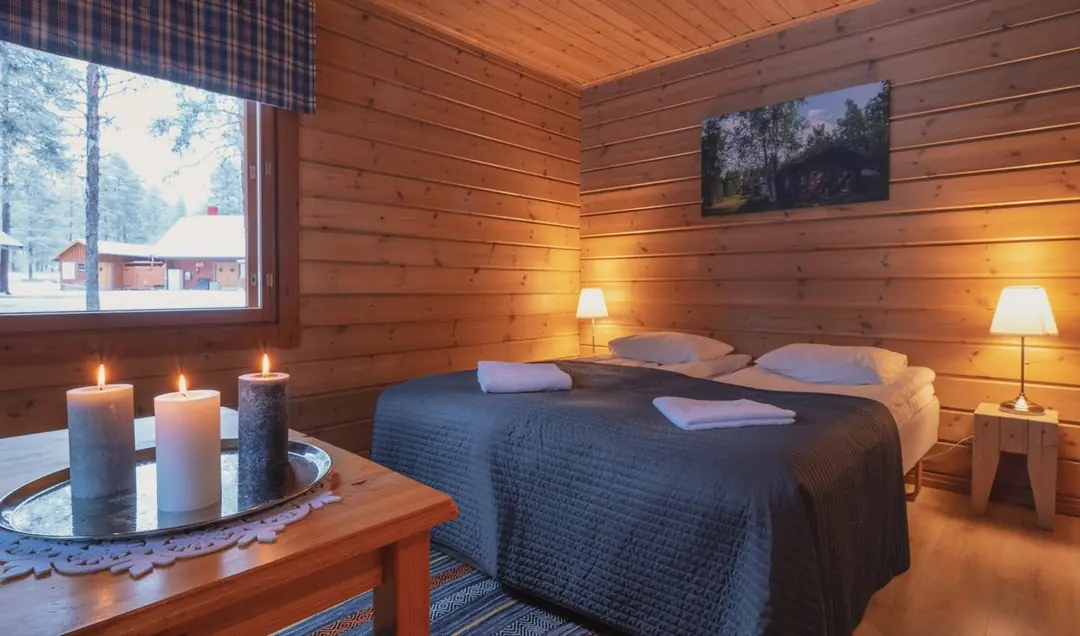
Finland's building regulations require accessibility in new public buildings, and modern hotel-style accommodation in Lapland is generally good: accessible rooms, lifts where there are upper floors, wider doorways and adapted bathrooms are common. The weak spot is the traditional log cabin. Older cabins often have steps at the entrance, raised thresholds, narrow internal doors, compact bathrooms and sometimes a loft bedroom reached by a ladder or steep stairs. None of that rules a cabin out for everyone, but it has to be checked, not assumed.
Ask the questions that produce measurable answers. Is the entrance step-free, and if not, how many steps are there? How wide are the internal doorways, in centimetres? Is the shower a roll-in design, or is there a step or bath edge to negotiate, and are there grab rails? Are all beds on the ground floor? How far is it from the cabin door to the restaurant, and can the resort help with that journey in deep winter? Browse the accommodation in Lapland we use, then put these questions to us directly; asking the provider beats relying on a booking-site filter every time, and staff in Finland tend to give refreshingly straight answers about what they can and cannot offer.
Flights, Airports and Transfers
Air travel is often the smoothest part of the trip. Lapland's airports, including Kittilä, which serves our resort, are small, so the distances from aircraft to arrivals are short, and wheelchair assistance is available at all of them. The key is notice: request special assistance through your airline at least 48 hours before you fly, and ideally at the time of booking. The same service exists at your UK departure airport, so book it for both ends of the journey, including the trip home.
Then look at the middle leg. Ask what vehicle meets your flight, whether it has steps, whether a folded wheelchair or rollator can be stowed, and how long the transfer takes. If a member of your group cannot manage coach steps, say so before travel; alternatives can often be arranged when the resort knows in advance. Our guide to airport transfers in Lapland explains how arrival day runs, and the travel and flights page covers the journey itself.
Snow, Ice and What Winter Does to Wheels
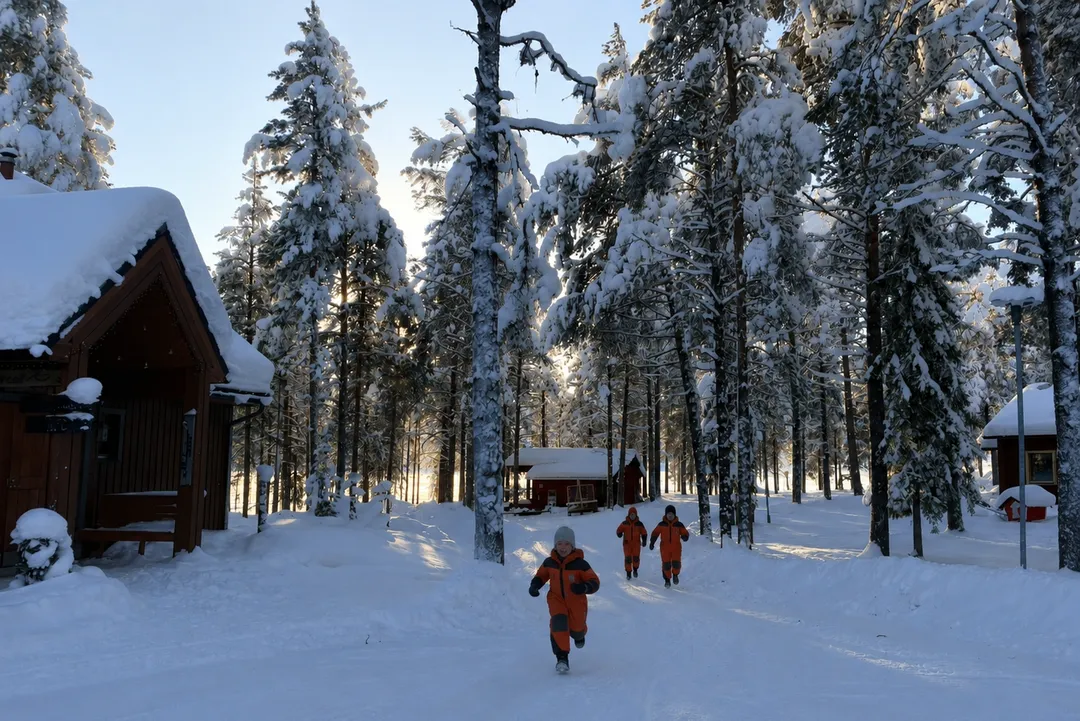
Here is the part that deserves total honesty: deep snow and standard wheelchairs do not mix well, and Finland's own tourism guidance acknowledges that moving with assistive devices is harder during the snowy months. But winter also does something helpful that surprises people. Resort paths are ploughed and packed hard, and a firm, groomed snow surface or frozen ground can actually be easier for some wheeled equipment than soft, wet terrain in other seasons. The difference between the two is maintenance, which varies from resort to resort.
So ask specifically: are the routes between the cabins, the restaurant and the activity meeting points cleared and gritted or packed firm through the winter? What are the distances in metres? Is there somewhere warm to pause partway on longer routes? Can staff move a family member between buildings by vehicle when needed? And ask your equipment supplier how the chair or powered aid behaves in severe cold, from tyre grip to battery performance, so nothing about the environment is a surprise.
Activities: Seated Options and Honest Adaptations
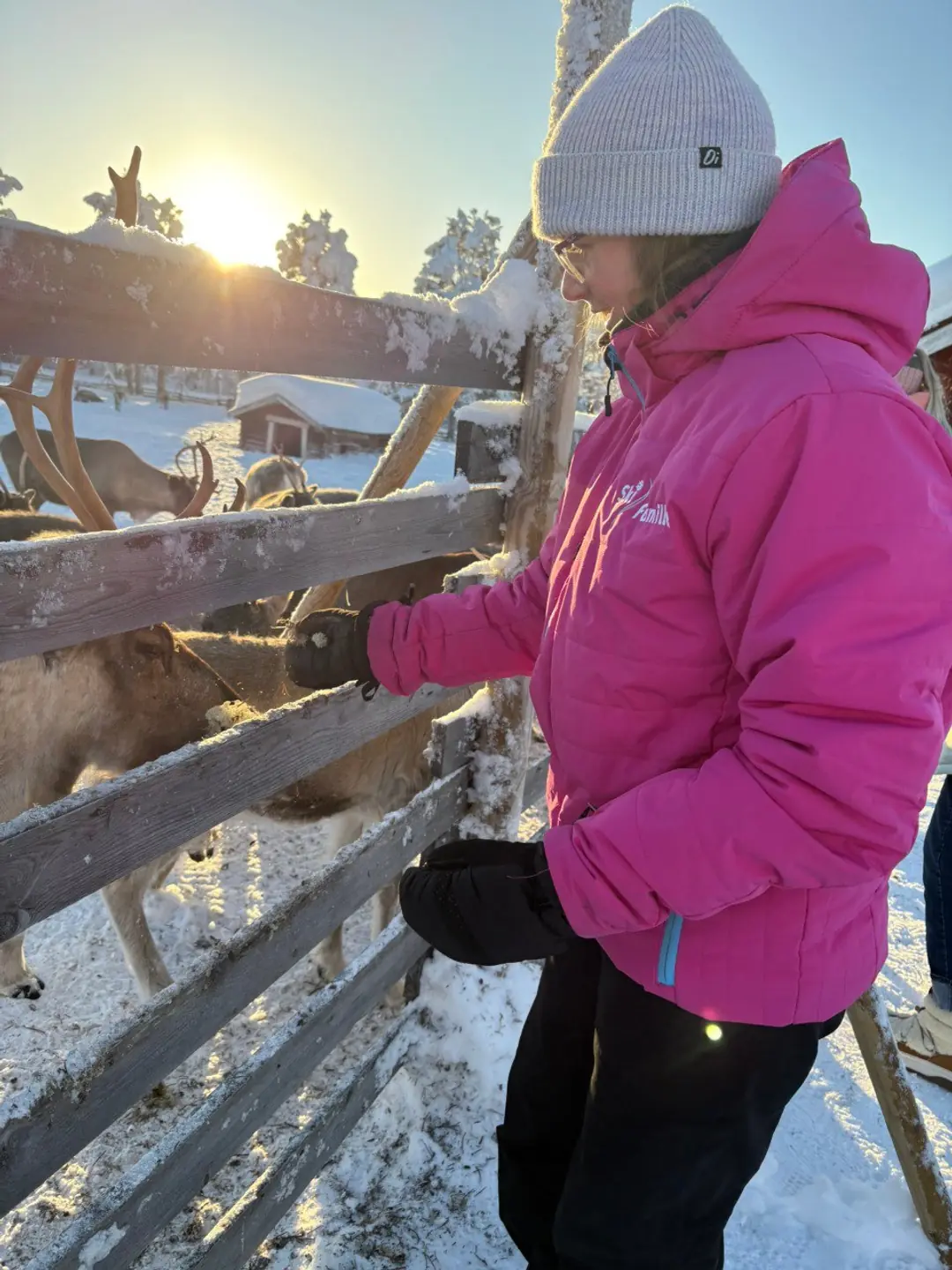
The happy secret of Lapland is that its gentlest experiences are also its most magical, and many are naturally seated. A reindeer sleigh ride involves sitting wrapped in blankets while the reindeer does the work. On a husky safari, one guest can ride seated in the padded basket of the sled while an adult or guide drives. Snowmobile safaris routinely tow a covered passenger sleigh for anyone who does not want to drive or ride pillion. Meeting Santa happens indoors, in a warm cabin, over a short distance. Some Arctic operators have gone further and invested in adapted equipment such as sit-skis and sled attachments, so it is always worth asking what exists locally.
The useful questions here are about the edges of the experience rather than the experience itself. How far is it from the vehicle drop-off to the sled, sleigh or farm? Is there seating while the group waits? Can the family transfer a member from a wheelchair into a sleigh with staff help with the equipment? Can timings be arranged for a quieter slot so nobody feels rushed or watched? Review the Lapland activities on offer, decide what the whole group wants to share, and let us know so the guides can plan the details in advance. Families planning around grandparents will also find our guide to three-generation Lapland holidays useful for pacing the wider group.
The Questions to Send Before You Book
About the accommodation: Is the entrance step-free? How wide are the internal doors in centimetres? Is there a roll-in shower or grab rails? Are all beds on the ground floor? How far is the cabin from the restaurant?
About the journey: Can special assistance be booked with the airline for both directions? What transfer vehicle is used, does it have steps, and can mobility equipment be stowed? How long is the transfer?
About the resort in winter: Are paths between buildings cleared, gritted or packed firm? What are the walking distances in metres? Can staff help move a family member between buildings when needed?
About the activities: Which experiences are seated? What adapted equipment or alternatives exist? How far is each activity from the drop-off point, and can quieter timings be arranged?
Send that list with an honest description of your family member's needs, and a good provider will come back with specifics, including anything that genuinely will not work. That candour is what you want; an accessible holiday is built on accurate answers, not optimism. We are happy to go through every one of these questions for our own resort when you request a quote.
Accessible Lapland Holidays: Your Questions Answered
Can a wheelchair user enjoy a family Lapland holiday?
Many can, with planning. Modern accommodation with step-free access, naturally seated activities such as reindeer sleigh rides and husky sled baskets, and airport assistance at both ends make a resort-based trip realistic for many wheelchair users. The deciding factors are usually the specific accommodation layout and the distances between buildings, so ask for exact details before booking.Are traditional log cabins suitable for reduced mobility?
Not automatically. Many traditional cabins have entrance steps, raised thresholds, narrow internal doors, compact bathrooms and sometimes loft bedrooms. Some resorts offer newer or adapted units on one level. Ask for step counts, door widths in centimetres and the bathroom layout, and consider modern hotel-style rooms if a suitable cabin cannot be confirmed.How do we arrange wheelchair assistance at the airport?
Request special assistance through your airline at least 48 hours before you fly, and ideally when you book. The service covers check-in, security, boarding and arrival, and it operates at UK departure airports and at Lapland's small airports alike, where distances are mercifully short. Remember to book it for the return journey too.Should we tell the holiday company about mobility needs before booking?
Yes, and the earlier the better. Describing what the traveller can comfortably manage, with distances, steps and equipment spelled out, lets the resort allocate the right accommodation, plan the transfer and arrange activity timings. Surprises are the real enemy of an accessible trip, and early detail removes them.Ready to Plan Your Lapland Adventure?
Family-first Lapland holidays at Torassieppi, Muonio — 3 and 4-night breaks from London Gatwick. Tell us about your family and we'll build your quote.
Send Enquiry