
Of all the questions parents ask before a Lapland holiday, the quietest one is often the most anxious: what is this going to do to the children's sleep? There is an early flight at one end, a time change in the middle, four days of maximum excitement in the Arctic dark, and school waiting on the other side. It sounds like a recipe for weeks of disruption.
Here is the reassuring truth from paediatric sleep specialists: most of what parents fear about holiday sleep simply does not materialise, and the little that does is short lived and fixable. This guide walks through the whole arc, the departure morning, the two hour time difference, bedtimes in a snow silenced cabin, naps on the go, and the reset when you get home, with practical routines for each.
Two hours is not jet lag: what the time difference really means
Finland runs two hours ahead of the UK. When it is 17:00 at home it is 19:00 at the resort, and that is the entire time shift your family is dealing with. This is not long haul jet lag with its day night reversal; it is a nudge, roughly the difference between term time and holiday bedtimes in many houses, and children's body clocks absorb it without any special protocol.
On a three or four night break there is no need to pre shift sleep schedules in the week before you fly, and no need to fight the clock while you are there. The practical effect is mildly in your favour on arrival: a child whose body thinks it is 19:00 is being offered a 21:00 Finnish bedtime, so the first night usually lands easily after a travel day. Full details of flight times sit on our travel and flight information page.
The early start: getting through departure day
The genuinely hard part of the trip for sleep is not the time zone, it is the alarm clock on day one. Three night trips depart London Gatwick at 06:10 on a Saturday, which with check in means leaving home in the small hours; four night trips leave at a far more civilised 10:25 on a Tuesday. If your children are sensitive to lost sleep, that difference alone is worth weighing when you choose the trip length.
For the early departure, the classic moves all help. Consider an airport hotel the night before so the wake up is later and calmer. Travel in soft clothes or pyjamas and let children sleep in the car and on the plane rather than defending nap rules; on a travel day, sleep wherever it happens is good sleep. Keep the arrival day expectations gentle, which is exactly how the day by day itinerary is built: the first day is transfer, thermal clothing fitting and dinner, nothing that punishes a tired child.
On the trip: follow the child, not the clock
Should you move children onto Finnish time or hold them to UK time? On a short break the honest answer is neither, exactly. Keep an eye on the child rather than the clock: run bedtime by the same internal timing as at home, which will land around two hours later on the Finnish clock, and let the days themselves do the adjusting.
In practice, Lapland pushes bedtime earlier all by itself. Darkness arrives in the mid afternoon, dinner is early, and a day of cold air, snow and adrenaline is the most effective sleep aid yet devised. Many parents report children asking for bed on Arctic evenings, a sentence rarely heard at home. Trust that rhythm rather than engineering one: rested children for tomorrow's husky safari matter more than consistency with any time zone.
Bedtime in the cabin: pack the routine, not just the pyjamas
Sleep specialists agree on the single most portable piece of sleep equipment: the routine itself. Whatever sequence signals bedtime at home, bath, milk, two stories, song, lights out, run the same steps in the same order in the cabin, and dim the lights while you do it. The familiar pattern is the cue that tells a small brain this strange and wonderful place is still safe for sleep.
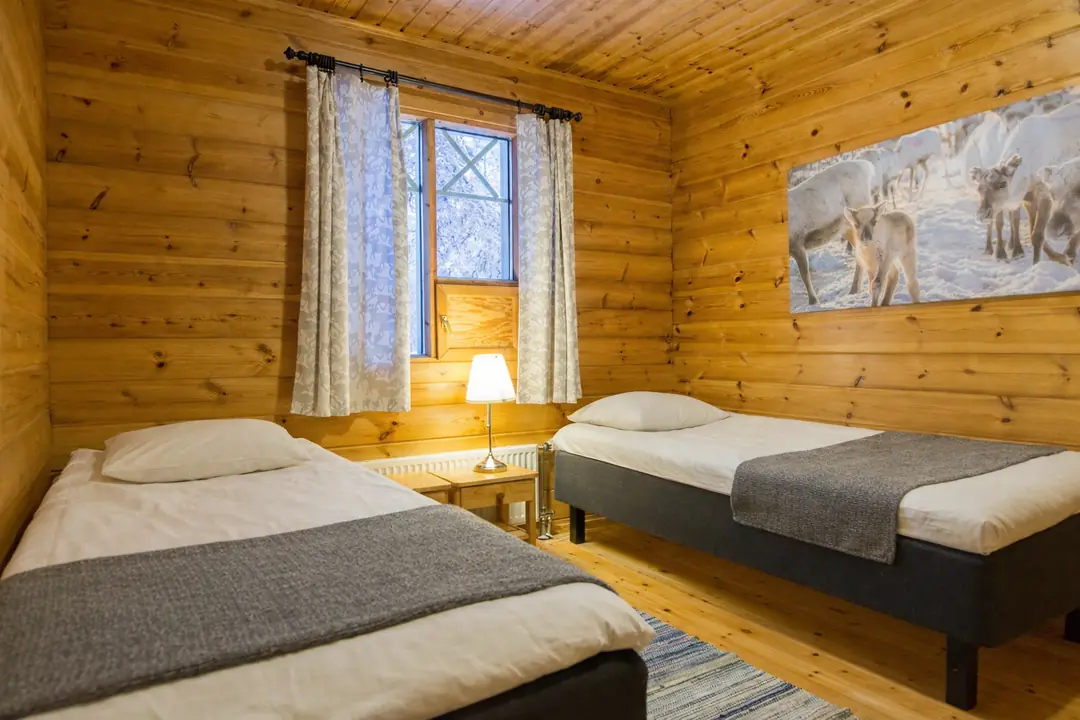
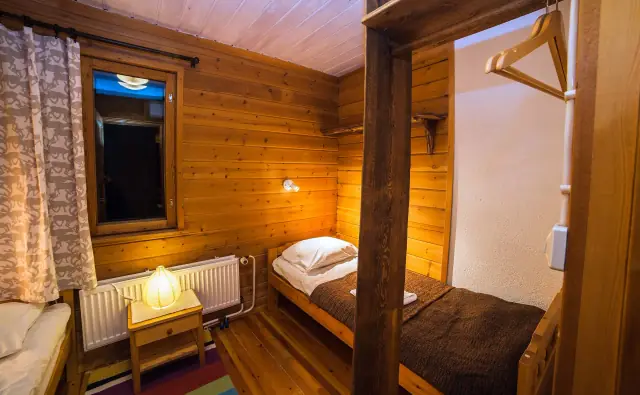
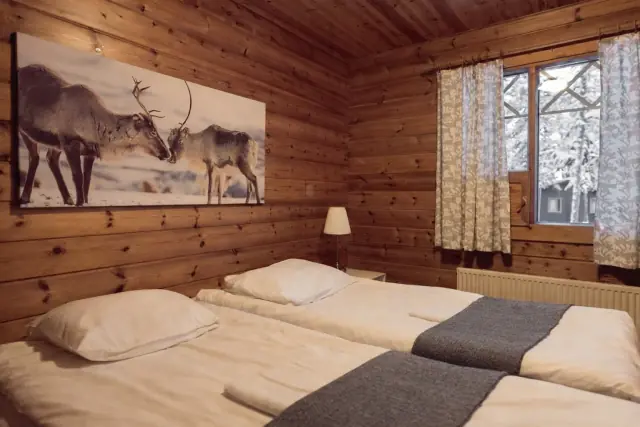
Bring the physical cues too: the comforter or teddy, the usual sleeping bag for a baby, a familiar book. The rooms themselves are on your side, snow muffles sound wonderfully and midwinter provides natural blackout from mid afternoon, and our family accommodation is built around families doing exactly this. A warm shower or a gentle family sauna before pyjamas, followed by fireside wind down instead of screens, sends children to bed warm, heavy limbed and content.

Naps without a battle
For children who still nap, Lapland is unexpectedly cooperative. The sway of a reindeer sleigh is a well known toddler sedative, a wrapped up child in a pulled sled will often drop off between activities, and there is no shame in a pushchair or carrier nap in the fresh cold air, which Nordic parents actively favour. Our Lapland with toddlers guide covers the kit that makes moving naps work.
Two light touch rules keep naps from stealing the night. Where you can, cap daytime sleep at around ninety minutes, and try to avoid naps drifting late into the afternoon; a child who sleeps from four until five will cheerfully renegotiate bedtime. On the big excitement days accept that naps may not happen at all and aim everyone at an earlier night instead.
Coming home: the forty eight hour reset
The return leg carries the same two hour shift in the other direction, and the same rule applies: do not overthink it. Paediatric advice for the first night home is to run bedtime at the normal time, not early, even after a travel day, and to accept that the next day or two may include a scratchy patch in the late afternoon while the clock settles.
Consistent mealtimes are the quiet lever here: breakfast, lunch and dinner at their usual hours re anchor a child's body clock faster than negotiating about sleep ever does. Keep the first day home low key, get outside in daylight, and by the second or third morning most children are exactly where they were before the trip, except with a story about huskies that will outlast every routine.
Sleep is worth planning for on a Lapland break, but it is not worth fearing. Choose the trip length with your early riser tolerance in mind, protect the familiar bedtime sequence, let sleds and fresh air handle the naps, and hold your nerve for two days when you land back home. If you would like advice on dates, flight times or which trip suits a family of light sleepers, get in touch and we will talk it through.
Is there jet lag between the UK and Lapland?
Not in any meaningful sense. Finland is two hours ahead of the UK, a nudge rather than a shift, and children absorb it without special preparation on a short break. There is no need to adjust sleep schedules before you travel; run bedtime by your child's usual internal timing and let the trip's rhythm do the rest.How do we cope with the 06:10 departure with small children?
Treat departure day as its own project: an airport hotel the night before makes the morning far calmer, pyjamas and soft clothes make the journey nap friendly, and sleep in the car or on the roughly three hour flight all counts. The first day at the resort is deliberately gentle, so a tired child has nothing demanding to face. If early starts hit your family hard, the four night trip departs at 10:25.Should children switch to Finnish time during the trip?
On a three or four night break, follow the child rather than either clock. Keeping bedtime at the familiar body clock time lands about two hours later on the Finnish clock, and the Arctic itself pulls bedtime earlier anyway: dark afternoons, early dinners and big outdoor days leave most children ready for bed without persuasion.How long does it take children to settle back into routine at home?
Usually a day or two. Put children to bed at their normal time on the first night home rather than early, expect a cranky window in the late afternoon while the two hour shift unwinds, and keep mealtimes at their usual hours, which re anchors the body clock quickly. Most children are fully back to normal by the second or third morning.Ready to Plan Your Lapland Adventure?
Family-first Lapland holidays at Torassieppi, Muonio — 3 and 4-night breaks from London Gatwick. Tell us about your family and we'll build your quote.
Send Enquiry