
Somewhere between booking a Lapland holiday and packing for it, most parents run into the same worry. A December trip inside the Arctic Circle means very little daylight, and surely that changes everything: will the children actually see the place, will the days feel gloomy, is the whole thing conducted in the dark? The short answer is that winter days this far north really are short, but they are nothing like the pitch black picture many families imagine.
This guide sets out what the light actually does in Finnish Lapland through the winter season, what the famous polar night looks like in practice, and how a family itinerary is built to work with the daylight rather than against it. The details below are written around Torassieppi, our resort near Muonio in north west Finland, but the pattern holds across the region.
How short are the days, really?
Start with honest numbers, using Rovaniemi on the Arctic Circle as the reference point most travel guides quote. On 1 December the sun rises a little after 10:00 and sets a little before 14:00, giving roughly three and three quarter hours of direct daylight. By mid December that window narrows to around two and a half hours, and the shortest day falls around 21 December. Torassieppi sits further north than Rovaniemi, so its dark season runs deeper: for a few weeks around midwinter the sun there does not clear the horizon at all.
Those figures sound stark on paper, and quoted alone they mislead. What they leave out is twilight. This far north the sun approaches the horizon at a very shallow angle, so dawn and dusk stretch out for hours rather than minutes. Even on days with no official sunrise, the middle of the day brings a long stretch of soft, usable light. Families out on a morning husky safari are not feeling their way through blackness; they are gliding through a landscape lit in watercolour.
It helps to picture an actual December day rather than a statistic. Breakfast happens in the dark, which feels strange on the first morning and normal by the second. From about 09:00 the sky begins its long slide into blue dawn, and by the time you are dressed in thermals and standing at the husky farm, the world is fully visible in cool, even light. Midday brings the brightest stretch, often with the low sun colouring the horizon gold and pink at once. The light starts thickening again by early afternoon, dusk drifts in around 14:30, and by 15:30 you are back to lantern light, hot drinks and the smell of dinner. No part of that day feels wasted; it just runs on a different clock.
The blue hours: what the polar night actually looks like
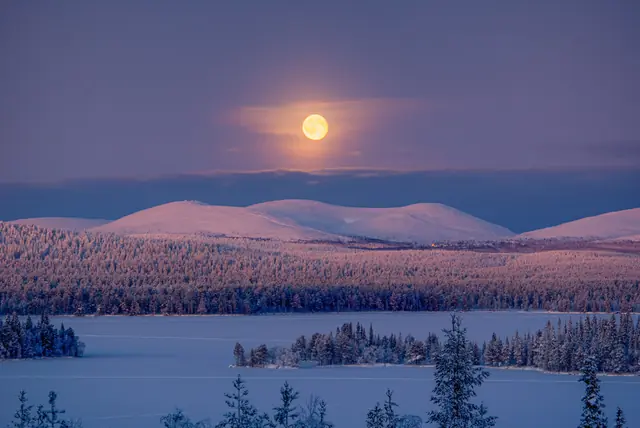
Finns call the sunless season kaamos, and it has a devoted following of its own. Instead of a normal day, midwinter midday brings several hours of blue and pink toned twilight, with the snow glowing in shades photographers travel a long way to catch. It is genuinely beautiful, and it is bright enough for sledging, snowball fights and reindeer rides.
Two things make the Arctic winter feel lighter than the sunrise tables suggest. First, snow reflects most of the light that reaches it, so the whole landscape acts like a second sky. Second, resorts are dressed for the dark: lanterns, firepits, fairy lights and warm cabin windows turn late afternoon into something children treat as an adventure rather than a disappointment. Head torches quickly become prized possessions.
How the itinerary works with the light
Operators plan around the brightest hours as a matter of course. The big daytime activities on our day by day itinerary, husky safaris, reindeer sleigh rides and snowmobile adventures, run through the middle of the day when the light is at its best, with lunch at the resort in between. You will also notice a line on every Lapland itinerary worth trusting: activity times can vary with daylight hours and weather. That is the programme flexing to give your family the best of the available light.
By around 15:00 in December it is properly dark, and the day simply changes register rather than ending. Dinner comes early, there is snow play under the resort lights, and the evening becomes the cosy, fire lit part of the trip that many parents remember most fondly afterwards.
Darkness is also the point: northern lights
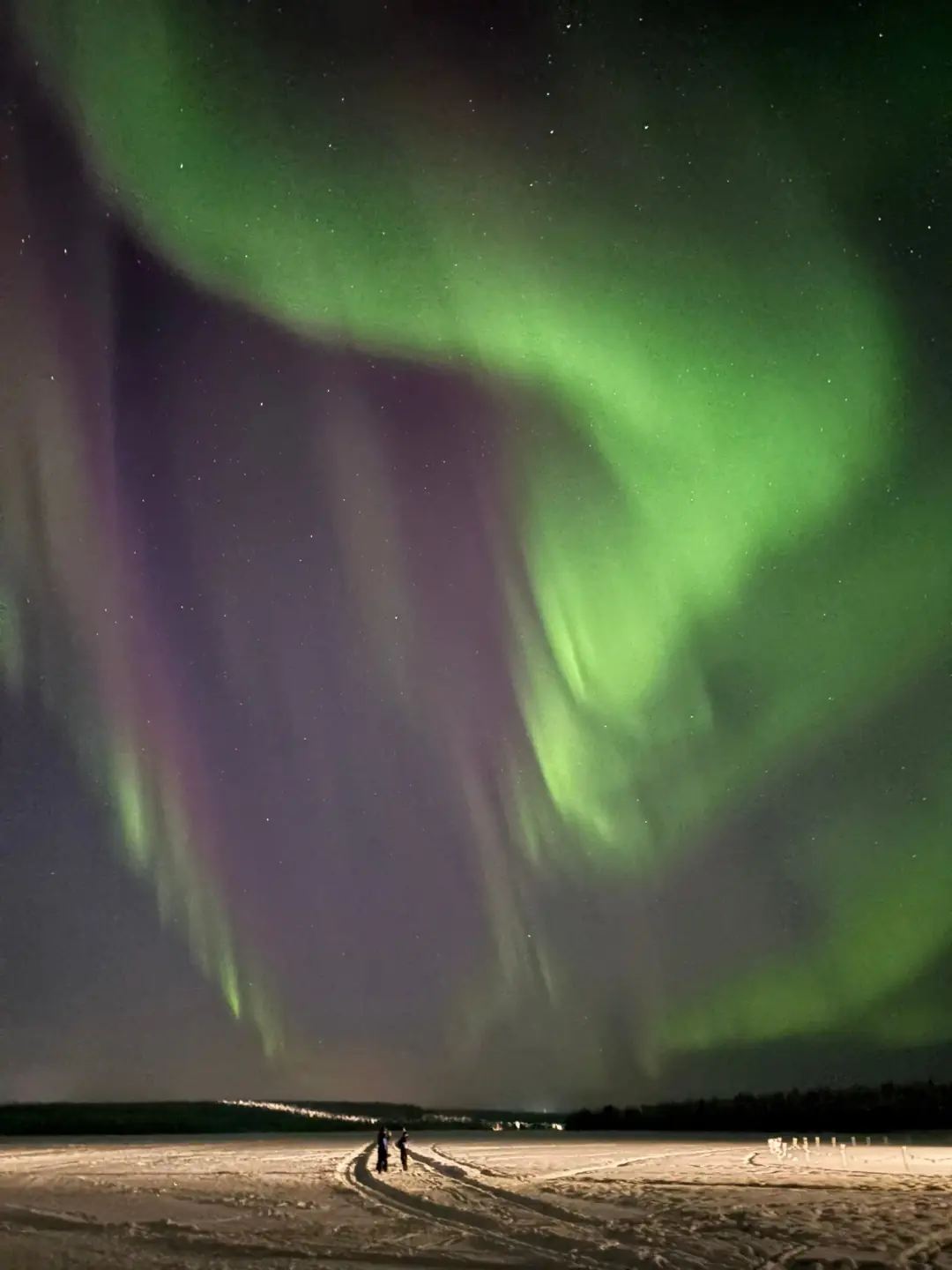
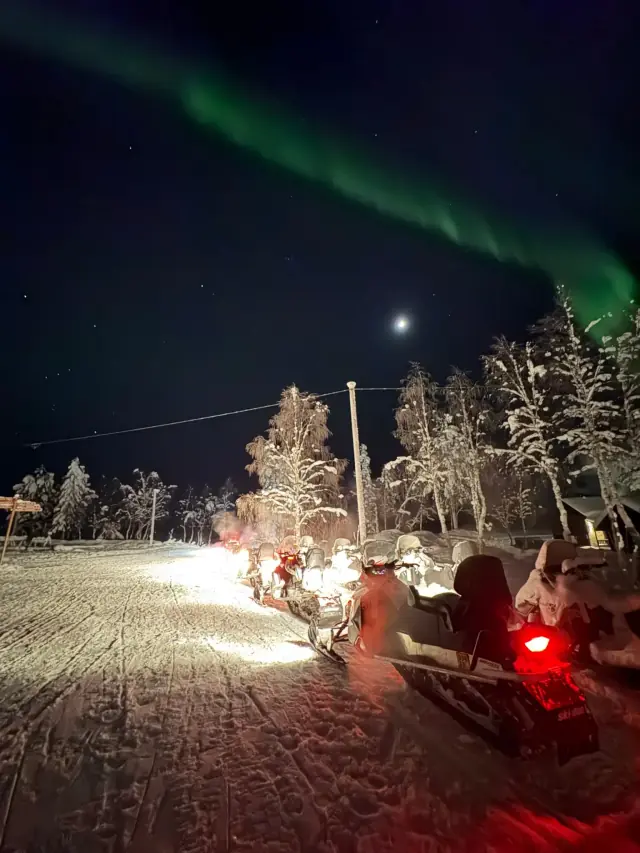
Every hour of missing daylight is an hour of potential aurora sky. The northern lights season runs through the dark months, roughly November to March, and the long evenings mean a December family trip gets far more viewing chances than most destinations can offer, often straight from the resort grounds before bedtime.
Two honest caveats belong here. Sightings depend on solar activity and clear skies, so they can never be promised, and cloud can hide a strong display. Treat the aurora as a possible bonus rather than the goal of the trip and you have the right expectations. Our guide to seeing the northern lights with children covers timings, patience tactics and how to keep small people warm while you watch the sky.
Choosing your dates by the light
Within the season, which for 2026 runs on selected departures from 28 November to 24 December, the light shifts noticeably. Earlier departures get the longest days: around four to five hours of direct daylight in late November by the Rovaniemi reference figures, with generous twilight either side. Dates closer to the solstice trade daylight for atmosphere: the deepest blue kaamos light, the darkest aurora skies and the full strength of the Christmas build up.
Neither end of the season is the wrong choice. If your children are very young and you want the most outdoor time in natural light, earlier suits you. If the twinkling, lantern lit version of the Arctic is the picture in your head, midwinter delivers it. Whichever you choose, you can browse dates on our Lapland holidays page.
For the wider picture, Lapland's light moves fast in both directions. November starts with around seven hours of daylight and sheds them quickly; December bottoms out around the solstice; and once the turn comes, the north races back toward the sun, with roughly six hours of daylight by early February and close to twelve by mid March. The dark season that worries first time visitors is really a short, deep dip in a dramatic yearly swing, and the trips in this season sit right in its most atmospheric weeks.
Practical expectations for families
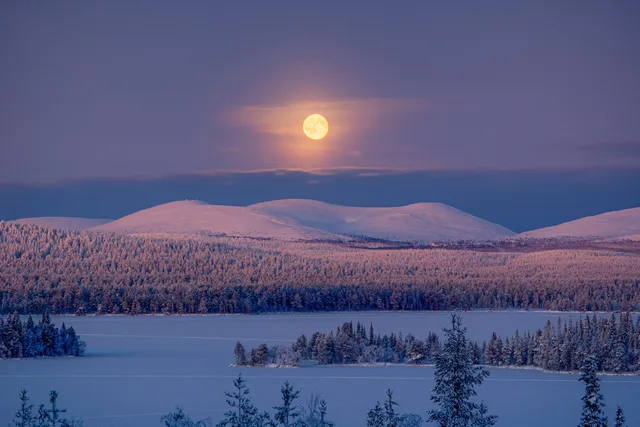
A few realistic notes to finish. The days feel fuller than the sunrise tables suggest, because the included activities are stacked into the bright window and the snow amplifies every bit of available light. Children adjust to the rhythm remarkably fast, usually faster than the adults, and the early darkness tends to make bedtimes easier rather than harder after an outdoor day.
Pack a head torch for each child, both practical and instantly beloved, and let the dark become part of the story: torchlit walks to dinner, star spotting, the chance of green light over the trees. Families who arrive expecting endless gloom come home talking about the light: the low golden sun, the blue hours, the glow of snow at dusk. It is one of the best reasons to go.
Is Lapland dark all day in December?
No. Even in midwinter there are several hours of usable light in the middle of the day. Around the start of December the Rovaniemi area gets close to four hours of direct daylight, shrinking to roughly two and a half hours by mid month, and at Torassieppi's more northerly latitude there is a stretch of a few weeks when the sun stays below the horizon. In practice midday brings hours of soft blue twilight rather than darkness, brightened further by reflective snow.What time does it get dark in Lapland in December?
Usable light generally lasts from mid morning until around 14:00 to 15:00, after which the evening sets in. Activities are scheduled into the bright window, and the long dark evenings become the cosy part of the day, with dinner, snow play under the lights and northern lights watching.Will we see the northern lights on a family Lapland trip?
There are no guarantees: displays depend on solar activity and clear skies. The dark season from roughly November to March offers regular chances though, and the long December evenings mean you can watch for them straight from the resort grounds without keeping children up late.Which dates in the season have the most daylight?
The earliest departures, from late November into early December, have the longest days of the season, at around four to five hours of direct daylight by Rovaniemi reference figures. Mid December dates have the shortest days but the deepest kaamos atmosphere and the darkest skies for aurora watching.Ready to Plan Your Lapland Adventure?
Family-first Lapland holidays at Torassieppi, Muonio — 3 and 4-night breaks from London Gatwick. Tell us about your family and we'll build your quote.
Send Enquiry