
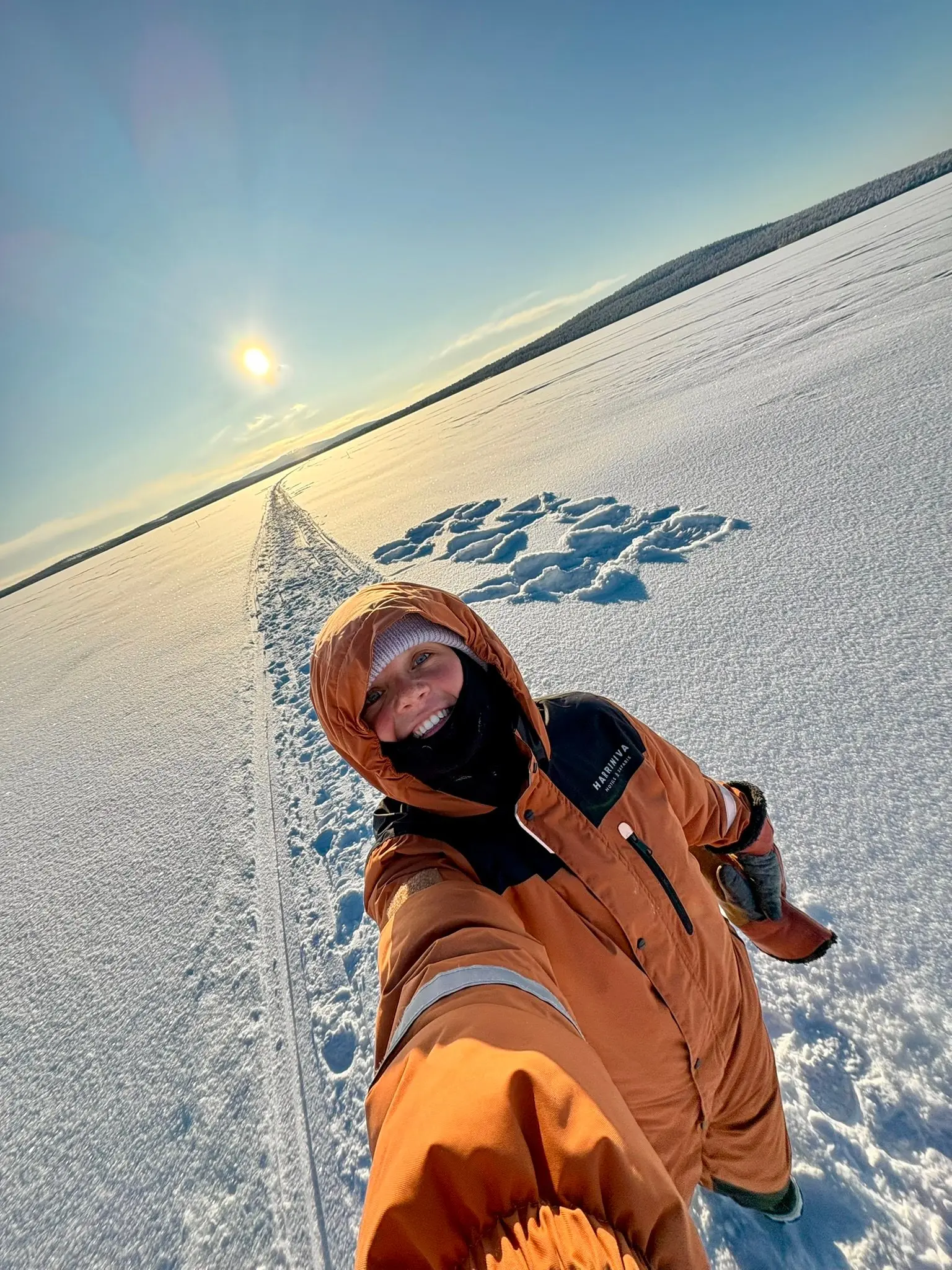
A Lapland holiday carries a particular kind of photographic pressure. This is a once-in-a-childhood trip; the light is otherworldly; your children may never again run at a reindeer with quite that expression. So parents arrive determined to capture everything, and the risk is obvious: you can spend the most magical week of family life watching it through a screen slightly smaller than a postcard.
The good news is that the choice between good photos and being present is a false one. The families who come home with the best pictures are rarely the ones who shot constantly; they are the ones who planned a few deliberate photographs, prepared their kit for the cold, and put the camera away for the moments that matter most. Here is how to do all three.
Decide Your Few Big Shots Before You Fly
Professional photographers working in the Arctic prepare rather than spray: they scout locations in daylight, decide what they want, and shoot with intent. Families can borrow the method wholesale. Before you travel, agree on a shortlist of three or four photographs you would genuinely frame: the family under the northern lights, the husky sled mid-flight, the first meeting with a reindeer, the doorway moment with Father Christmas. Everything else is bonus.
Browse our photo gallery to see what each experience actually looks like, then walk your list at the resort in daylight. Knowing that the frozen lake behind the cabins faces north, or that the sled track opens into a clearing, means that when the moment comes you lift the camera for ninety seconds instead of fumbling for ten minutes. A look through the Lapland activities you have booked tells you when each shot will present itself.
Prepare Your Kit for the Cold, or It Will Decide for You
The Arctic is genuinely hostile to phones and cameras, and most missed photos in Lapland are not about skill; they are about a dead battery at -20°C. Cold batteries hold a fraction of their room-temperature life, and a phone that reads 60% can shut down mid-shot in deep cold.
The routine that prevents it is simple:
- Charge everything to full every night, and turn on low-power mode before you head out, while the phone is still warm.
- Keep devices warm between shots. An inside pocket, close to your body and under the thermal suit, beats any day bag. Take the phone out to shoot, put it straight back.
- Carry spares warm. Camera users should keep spare batteries in an inner pocket; a battery that dies in the cold will often revive after twenty minutes somewhere warm, so rotate rather than discard.
- Let a frozen phone warm up before charging it. Give it twenty to thirty minutes back at room temperature first; charging a freezing battery does it no favours.
- Wear thin liner gloves under your mittens. Touchscreens do not answer to thick gloves, and bare fingers at -20°C buy you seconds, not minutes. Liners are on our Lapland packing list for exactly this reason.
Photographing the Northern Lights with the Phone in Your Pocket
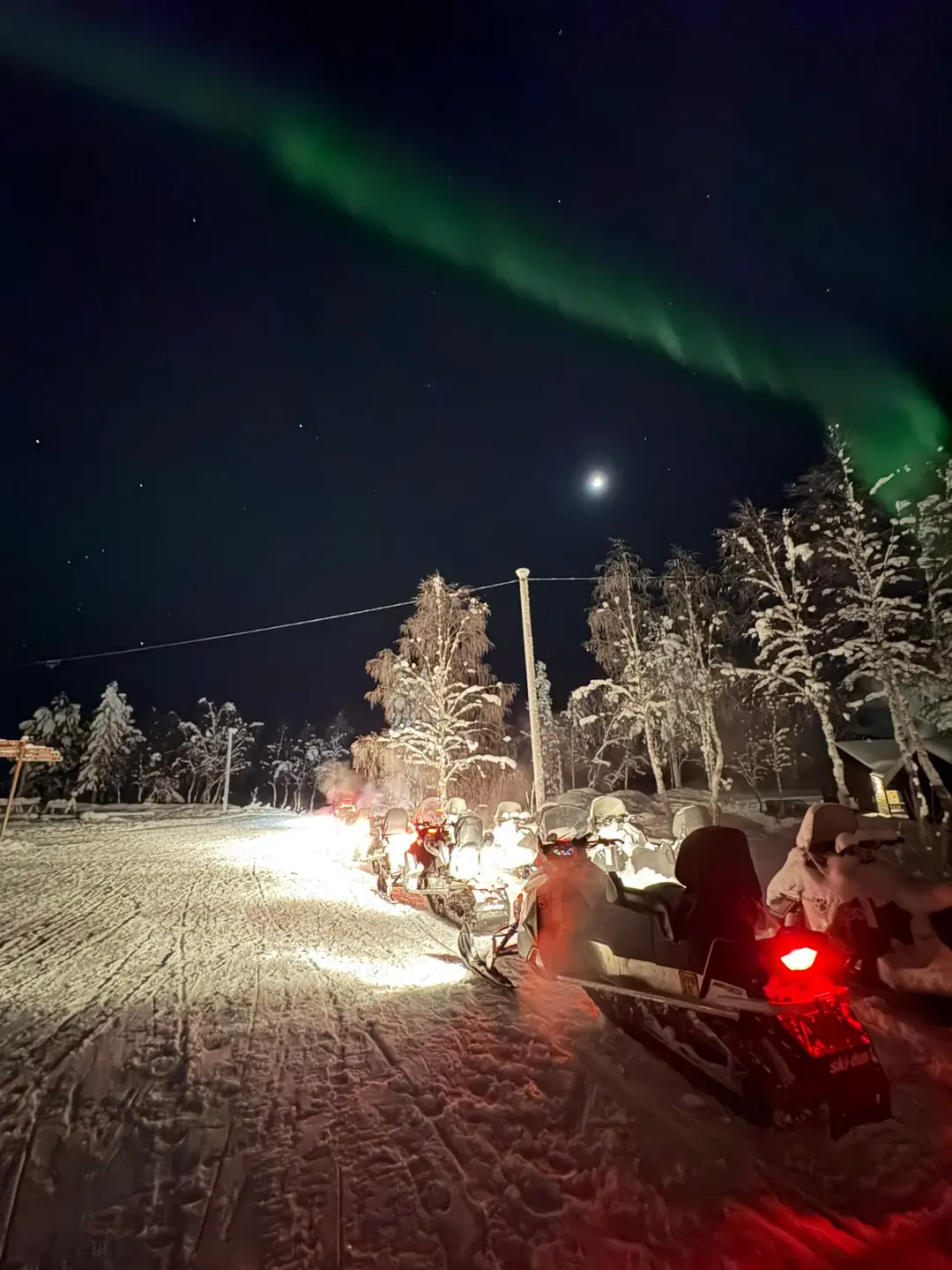
Here is the secret professional aurora guides now admit: they often check the sky with a smartphone. A modern phone camera gathers light for several seconds, so it sees colour and structure in a faint display that your eye reads as grey cloud. If you are unsure whether that pale streak is the aurora, point the phone at it; if the screen shows green, get the family outside.
For an actual keeper of a photo, the recipe is short:
- Turn the flash off, and use the main lens rather than the ultra-wide, which struggles in low light.
- Switch on night mode, or your phone's astrophotography or pro mode, and shoot in RAW if it is offered; exposures of three to ten seconds gather the light you need.
- Hold the phone absolutely steady: brace against a wall, rest it on a sledge, or pack a pocket tripod, which also unlocks longer, cleaner exposures on many phones.
- Take test shots even when the sky looks empty; the sensor outperforms your eye.
- Put people in the frame. An empty aurora is a postcard; your children silhouetted underneath it is a family heirloom.
Expect the display to demand patience, and let children watch rather than conscripting them as assistants; our northern lights guide for families covers timing, viewing conditions and how to keep young aurora hunters warm while you wait.
During Activities: Shoot the First Minute, Then Watch
Activity days are where documenting quietly takes over if you let it. Two habits keep it in check.
Appoint one photographer per activity, and rotate daily. When one adult owns the camera, everyone else is fully in the experience, and the photographer role stops silently defaulting to the same parent all week. Swap at the sauna, swap at the sled.
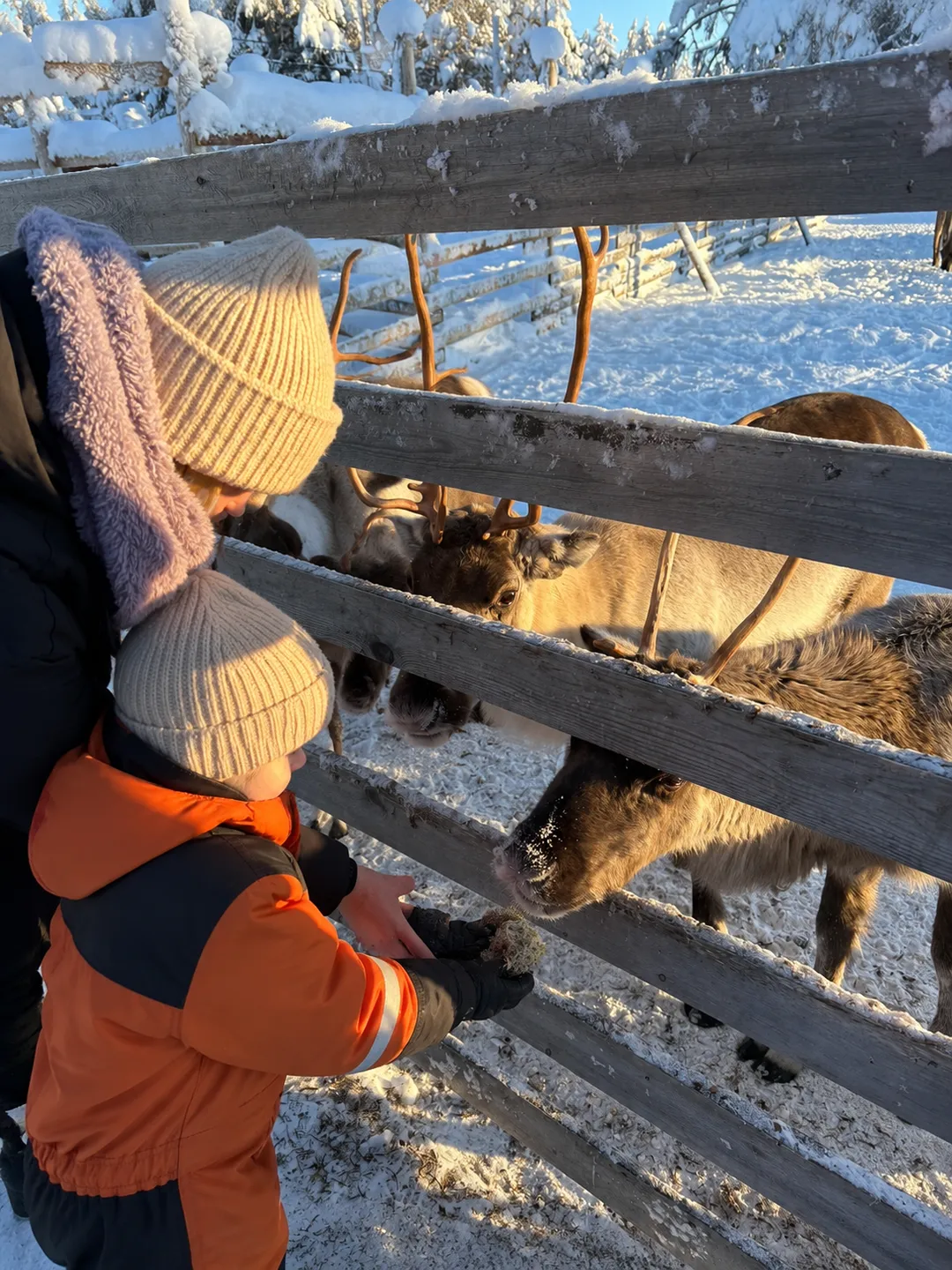
Use the first-minute rule. Shoot generously for the opening minute of anything: the huskies straining at the line, the first handful of reindeer moss, the first faceplant into powder. Then put the camera away and be where you are. The first minute contains the anticipation and the reaction, which are the photographs you will actually love; minute nine looks like minute two.
Candid beats posed at every age. A child concentrating fiercely on feeding a reindeer is a better photograph than the same child told to stand next to it and smile. Shoot from their eye level, catch the in-between moments, and ask your guides where the good stopping points are; they watch families do this every single day.
Put the Camera Down for the Moments That Matter Most
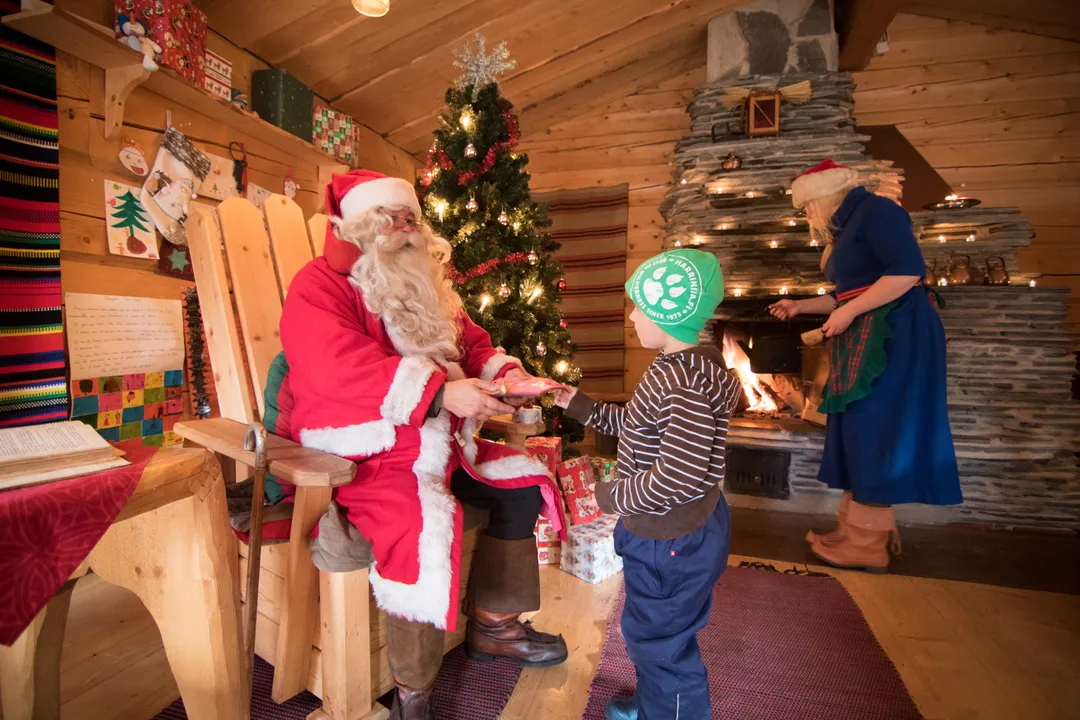
Some moments are worth more as memories than as footage, and the meeting with Father Christmas is the clearest case. A child walking into that cabin gets one first look at him, and it lasts seconds. If both parents experience it through their phones, nobody in the family actually saw it happen.
Agree the plan before the door opens: one adult takes a handful of discreet photos from the side, everyone else watches with their whole face. The same discipline pays off under a big aurora display: watch it first, properly, then shoot. The photograph of the northern lights will be lovely; the memory of your daughter gasping at them is the thing you are actually there to collect.
Remembering the Trip Beyond the Photos
Photographs are one memory system; children respond to others just as strongly. A few that families rate:
- A trip journal, five minutes a night. Each child writes or draws the best thing that happened that day. The spelling mistakes become the best part within a year.
- The paper trail. The letter to Father Christmas, a boarding pass, a chocolate wrapper with Finnish on it: a small envelope of flat souvenirs makes a memory box that outlasts any camera roll.
- One printed photograph per person. Let each family member choose a single image to print and frame when you get home. A photo on a wall is looked at for years; a photo in a phone is looked at until the next holiday.
- The retelling evening. One night after you are home, cook something warm, put the photos on the television and let everyone narrate. The stories that get told that night are the ones that stick.
Plan the days with our sample Lapland itinerary to see where the big moments will fall, and if you have questions about any of it, get in touch; we spend all winter watching families collect these memories, and we are happy to help you plan yours.
Photographing a Family Lapland Trip: Your Questions Answered
Can you really photograph the northern lights with a phone?
Yes. A modern phone in night mode, held steady, with the flash off and the main lens selected, captures the aurora well with a three to ten second exposure. Phones are so light-sensitive that guides use them to confirm faint displays the eye reads as grey cloud. A pocket tripod or a steady surface improves everything.Why does my phone battery die so quickly in Lapland?
Cold slows the chemistry inside the battery, so it delivers far less than its room-temperature life and can shut down abruptly. Keep the phone in an inside pocket under your thermal layers between shots, start each day fully charged with low-power mode on, and let it warm up indoors for twenty to thirty minutes before charging it again.Should we bring a proper camera or is a phone enough?
For most families a phone is genuinely enough, including for the aurora. If you already own a camera with manual settings it earns its place for northern lights work: a tripod, a wide aperture and higher ISO give you more control. Practise with the settings at home; learning them at -20°C in the dark is nobody's idea of a holiday.How do we end up with photos that include the whole family?
Rotate a designated photographer daily so no parent is missing from every picture, use self-timer or a pocket tripod for a full-family shot at each big location, and ask your guides to take one; they know the photogenic spots and do it every day.Ready to Plan Your Lapland Adventure?
Family-first Lapland holidays at Torassieppi, Muonio — 3 and 4-night breaks from London Gatwick. Tell us about your family and we'll build your quote.
Send Enquiry