
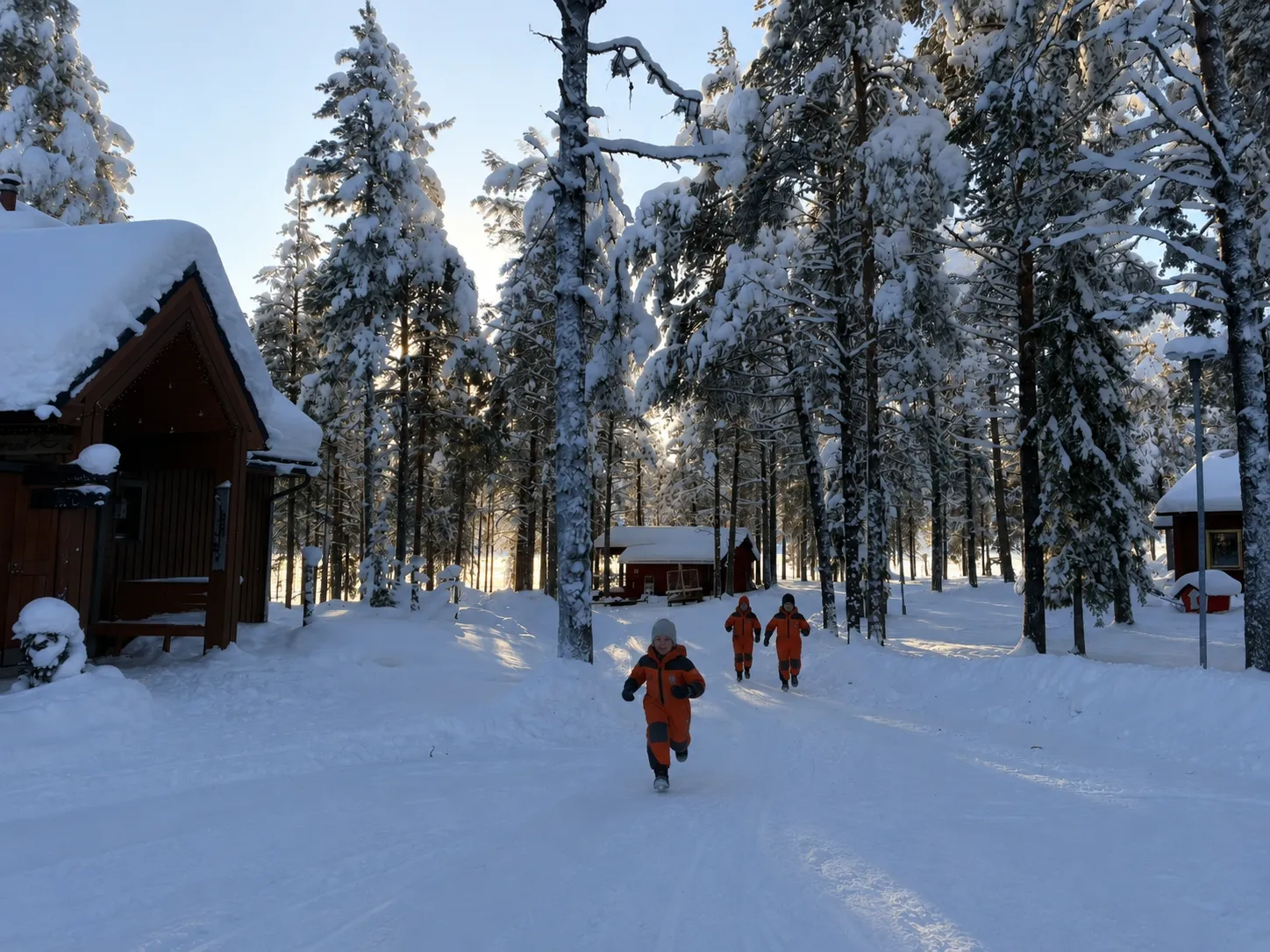
Packing for the Arctic sounds like a project. Temperatures on a Lapland activity day can sit anywhere between freezing and -25°C, and the instinct is to buy the biggest coat you can find, then fill every case to the zip. Most families do exactly that, and most families come home having worn about half of what they carried.
Here is the fact that should reshape your whole list: on our family Lapland holidays, thermal oversuits and boots are supplied for excursions. The most expensive, bulkiest items on a winter packing list are already waiting for you in the snow. What your family actually needs to bring is smaller, lighter and cheaper than you think. This guide walks through the decisions; if you want the item-by-item checklist, our full Lapland packing list covers every last glove liner.
Start With What You Will Be Given
For activity days, families are kitted out with thermal oversuits, insulated boots designed for Arctic conditions, and the thick outer layers that matter most when a husky sled picks up speed. The suit is an overall worn on top of your own clothes, and it is engineered for temperatures that ordinary ski wear only flirts with. That is worth pausing on: standard ski jackets and salopettes are designed for alpine slopes, and the deep cold of a Lapland forest can be a different order of thing. The supplied kit exists because it does the job better than anything in a typical family wardrobe.
Thermal boots normally come generously sized so there is room for a double layer of socks, and mittens or thick gloves are usually part of the arrangement for excursions too. The practical consequence is simple: do not buy specialist Arctic outerwear for a one-week trip. It is money spent on solving a problem that your holiday already solves.
One honest exception: the very youngest travellers. Suits in baby sizes are not always available, so if you are travelling with an under-two, check what your booking includes and read our Lapland with toddlers guide, which covers the extra kit small children genuinely need.
The Layers Only You Can Bring
A thermal suit keeps warmth in; the layers underneath create it. This is where your packing effort should go.
Base layers are the non-negotiable. A long-sleeved thermal top and thermal leggings for every member of the family, worn next to the skin. Merino wool is the gold standard because it stays warm, breathes and resists odour, which means one or two sets per person genuinely lasts the week: air them overnight and they are ready again. Synthetic thermals work well too and often dry faster. The one material to refuse is cotton. Cotton holds moisture against the skin and turns cold, which is why experienced Arctic hands treat cotton t-shirts and denim as indoor-only clothing.
Mid layers are your temperature control. A fleece or wool jumper, and fleece-lined or soft trousers, worn loose. Several thin layers beat one thick one, because the warmth lives in the air trapped between them; anything skin-tight squeezes that advantage away. Children need roughly two base sets and a couple of mid layers each, not a new wardrobe.
The small items do outsized work. Thin liner gloves under the supplied mittens mean a child can take a photo or eat a biscuit without baring skin. Liner socks under wool socks keep feet dry inside the thermal boots. A warm hat that covers the ears is essential, and a balaclava or buff keeps wind off small faces on sled rides; take two per child and rotate them as they damp through. One tip seasoned families swear by: when every child on the excursion is wearing an identical thermal suit, a bright, unmistakable hat is how you spot yours across a snowfield.
What Families Overpack, and Never Wear
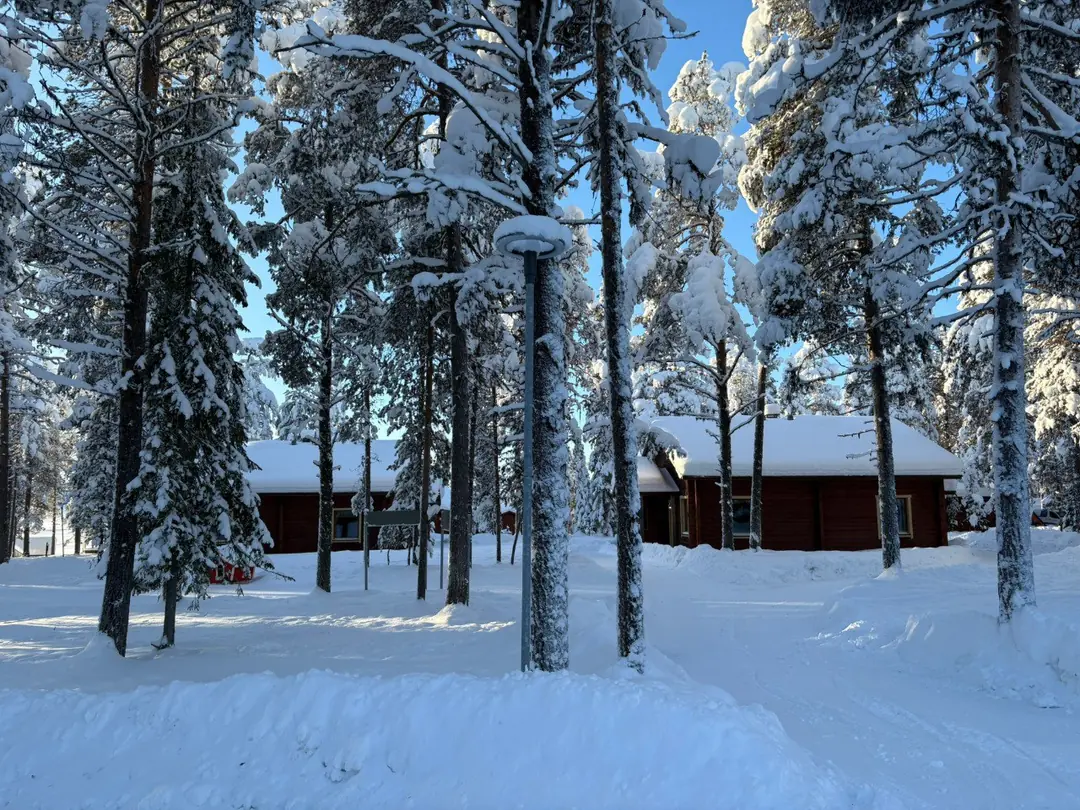
Every season the same items cross the Arctic Circle twice without leaving the suitcase. The bulky ski jacket, packed "just in case", worn only on the plane. The second and third pairs of jeans, which are no use outdoors and unnecessary indoors. Cotton hoodies and thick fashion jumpers that are too warm for a cabin and not warm enough for a sled. Wellies or fashion snow boots, outclassed by the thermal boots waiting at the resort.
You can also skip most of the entertainment mountain. Sledges, snow toys and games feel essential at home and redundant the moment your children see real snow; many resorts keep sledges and snow toys to borrow, so ask before you pack one. A modest day bag per adult, one warm coat per person for travel days and short strolls between buildings, and you are covered.
The overpacking trap is really a doubling trap: families pack a full outdoor wardrobe on top of the one the holiday provides. Pack the inner half and let the resort supply the outer shell.
Indoors Is Warm: Pack for Two Climates
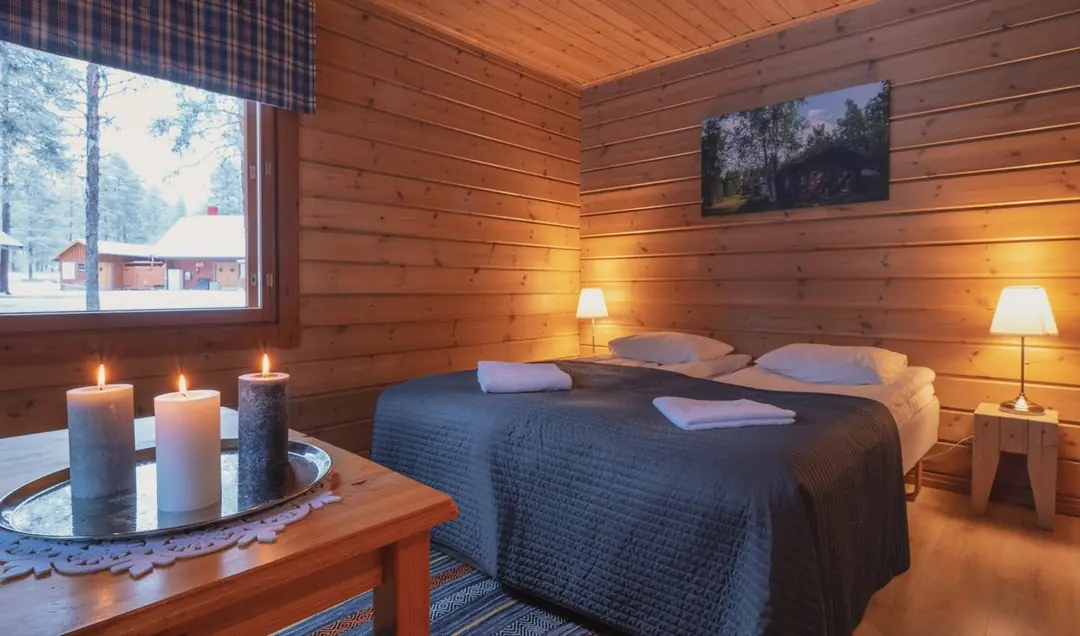
The packing list families expect is the Arctic one. The list they forget is the indoor one. Cabins, restaurants and reception buildings in Lapland are kept properly warm, and your family will spend every evening shedding layers rather than adding them. That means light, comfortable clothes for the evening: t-shirts, soft trousers or leggings, and a favourite Christmas jumper for dinner covers it. Thick socks or slippers for cabin floors earn their space too.
Then there is the sauna. Our accommodation in Lapland includes cabins with their own private saunas, and a post-safari sauna is the part of the day many parents quietly rate above the huskies. Pack swimwear for everyone and you will use it more than almost anything else in the case.
The Family Luggage Plan
With the outerwear question solved, a family of four fits comfortably into two hold bags. A few habits make the difference between a calm departure and a 5am scramble; our travel information covers the flight-day details, and these are the ones that matter for packing:
- Put one thermal set per person in hand luggage. If a hold bag is delayed, base layers are the one thing you cannot cheaply replace on arrival, and the thing your first activity day depends on.
- Dress for the journey, not the destination. Comfortable trainers and normal clothes for the flight; the Arctic kit starts at the resort, so nobody needs to board dressed for a husky safari.
- Pack by person, not by category. One packing cube per child means any bag can be opened in any order, and a tired seven-year-old's pyjamas are never at the bottom of someone else's case.
- Keep phone and camera kit warm and reachable. Cold drains batteries fast, so spare batteries and phones travel best in inside pockets rather than day bags.
- Leave give in the case. Between gifts from Father Christmas and the souvenir stand, more comes home than goes out.
A Decision Checklist Before You Zip the Case
Run the list once more with five questions:
- Does every person have two base-layer sets, none of them cotton?
- Are the liners in: thin gloves under mittens, thin socks under wool socks, a buff or balaclava per child?
- Is there a hand-luggage thermal set per person in case a bag goes missing?
- Have you packed for the warm half of the holiday: indoor clothes, swimwear, slippers?
- Is anything in the case duplicating what the holiday provides? If so, take it out.
Pack that way and you arrive light, warm and ready for the Lapland activities your family came for. If you are still weighing up the trip itself, request a quote and we will help you plan the rest.
Lapland Packing Decisions: Your Questions Answered
Do we need to buy ski jackets and snow trousers for a Lapland holiday?
Not for the excursions. Thermal oversuits and boots are supplied for activity days, and they outperform standard ski wear in deep cold. Bring one warm winter coat per person for travel days and short walks between buildings, and spend your money on good base layers instead.What do children wear under a provided thermal suit?
A thermal base layer next to the skin, then a loose fleece or wool mid layer, with liner gloves, wool socks over thin socks, a warm hat and a buff or balaclava. Avoid cotton in any outdoor layer; it holds moisture and turns cold.How many clothes do we need for a three or four-night trip?
Less than you think. Two base-layer sets and a couple of mid layers per person covers the outdoor side, because merino and synthetic thermals air overnight and can be worn again. Add an indoor outfit for each evening, swimwear for the sauna and one spare set for younger children.Is there anything the resort cannot provide that we must not forget?
The next-to-skin items: base layers, liner gloves and socks, hats, buffs, swimwear and any medicines your family needs. Suits for children under two are not always available, so check what your booking includes for the smallest travellers before you fly.Ready to Plan Your Lapland Adventure?
Family-first Lapland holidays at Torassieppi, Muonio — 3 and 4-night breaks from London Gatwick. Tell us about your family and we'll build your quote.
Send Enquiry