
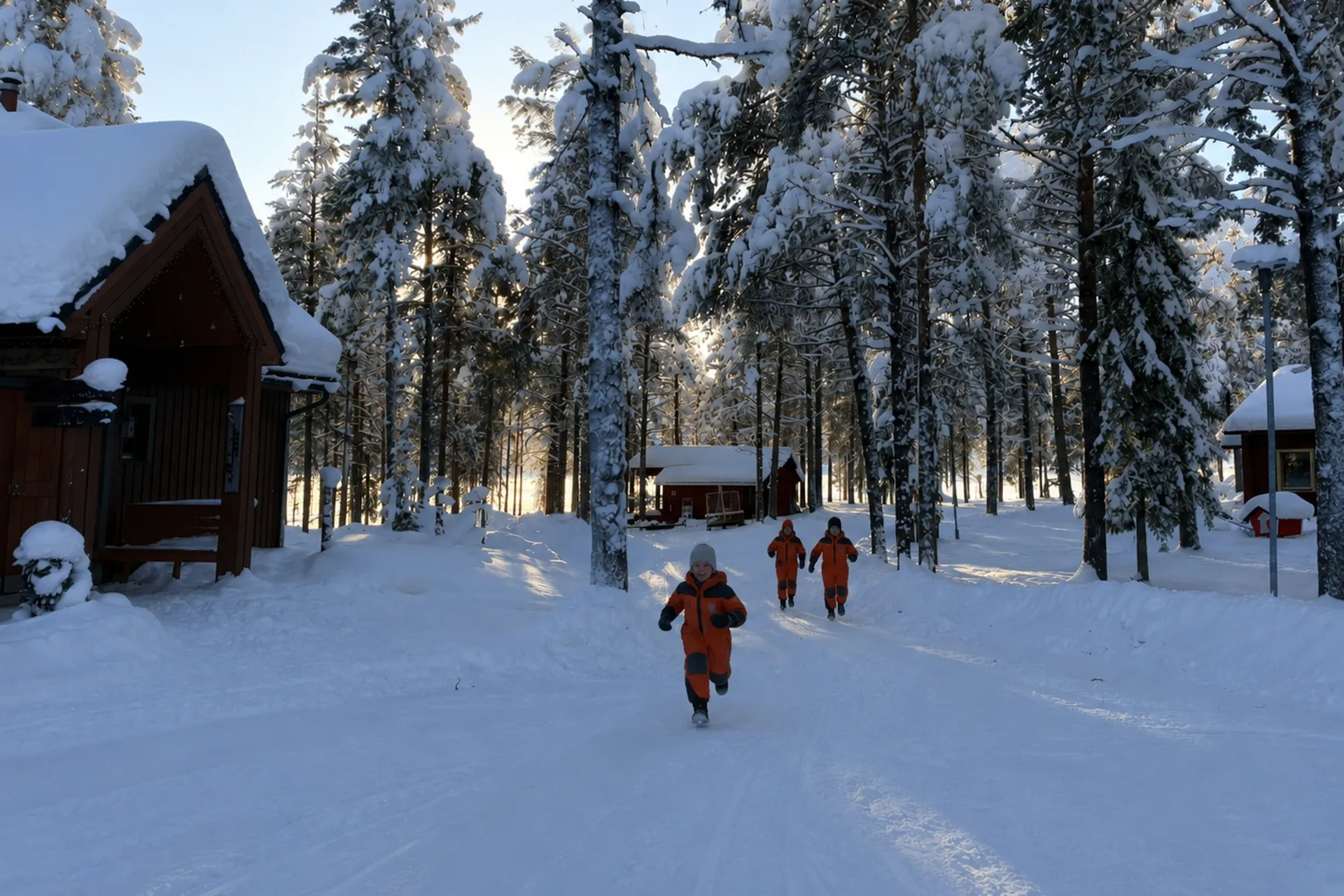
The kit list gets all the attention before a Lapland trip, and if clothing is what you are after, our Lapland packing list has it covered. This checklist is about everything else: the passports, cards and apps, the flight day with children, the food questions, and the moment the aircraft doors open onto Arctic air. It runs in rough time order, from six weeks out to the first cold morning, because pre departure jobs are easy when they are early and stressful when they are not.
Six weeks out: passports, cards and cover
Start with passports, because they carry the only deadlines you cannot negotiate. Finland follows Schengen area rules, and gov.uk's entry guidance for Finland is specific: your passport must have a date of issue less than 10 years before the day you arrive, and an expiry date at least 3 months after the day you plan to leave the Schengen area. Check every passport in the family against both rules, not just the grown ups' documents; children's passports are renewed more often and it is easy to lose track of one. The same guidance is blunt about the consequence: travellers without a compliant document are denied entry. For a normal family holiday no visa is needed, since UK citizens can visit the Schengen area for up to 90 days in any 180 day period. If any passport fails the arithmetic, renew it now, while the wait is measured in weeks rather than panic.
Two more pieces of paper earn their place in the wallet. First, a UK Global Health Insurance Card for each of you: the NHS explains that a GHIC gives you necessary state healthcare in the European Economic Area on the same basis as a resident, it is free to apply for, and cards normally arrive within about 15 working days. The NHS is equally clear that the GHIC is not a replacement for travel insurance, so arrange proper travel and medical cover as well, and check what it says about snow activities before you rely on it. Second, if your trip is a flight inclusive package, keep the ATOL Certificate you were given when you paid with your travel documents; it is the paperwork that backs the Civil Aviation Authority's protection if a travel company fails. Details on how our own trips are organised live on our travel information page.

Two weeks out: phones, food plans and the flight bag
A little phone admin buys real peace of mind. Download the 112 Suomi app before you travel: it is the free official app of Finland's Emergency Response Centre Agency, and an emergency call made through it shares your phone's location, as well as delivering public safety alerts for the region you are in. Finland's emergency number is 112, the same from any phone. Visit Finland's safety advice adds a practical winter point parents rarely hear elsewhere: phone batteries drain faster in the cold, so carry phones fully charged and bring a power bank on activity days. While you are at it, ask your mobile provider what using your phone in Finland will cost, because roaming terms differ between networks, and download offline maps and a few films for the journey.
Food planning starts before the flight, and it is mostly about honesty rather than effort. If anyone in the family has an allergy or a serious dietary requirement, tell your holiday company in writing now rather than at the first dinner, and read our guide to managing food allergies for how that conversation works in practice. For everyday fussiness, pack a small bag of familiar snacks: the goal is not to feed a week from your suitcase but to bridge the gaps, on the flight, between activities, and on the first evening when everything is new. Resort mealtimes may sit earlier or later than home, so a child who eats at rigid times will cope better with a snack routine you control.
The flight bag itself is worth packing deliberately. Boarding passes and passports where a gloved hand can reach them. A full change of clothes per child, because spills happen at altitude. Any medicines your family uses in the hand luggage, in original packaging, with the prescription if there is one. Entertainment that survives a flat battery. And dress everyone in removable layers on the day: airports are warm, aircraft are warmer, and what waits at the other end is not.
The night before: build the arrival bag
Here is the single most useful pre departure habit we know: pack one small bag for landing, and keep it in the overhead locker rather than the hold. Into it go hats, gloves, buffs and warm socks for every member of the family. The reason is simple. The Finnish Meteorological Institute's seasonal data shows winter mean temperatures below zero, with winter lasting about 200 days in Lapland, and in midwinter the region sits in the twilight of the polar night. You will walk out of a warm terminal into genuinely Arctic air, and the difference between a magical first breath and a crying toddler is usually whether the hats were in the right bag. If your holiday includes provided thermal suits, as ours do, you do not need full expedition kit for the journey itself; our guide to when thermal suits are provided explains what stays at home.
Landing day: the first hours in the cold
Set expectations on the plane, especially for children who have never felt real cold. The first breath outside is sharp and surprising, and then, dressed properly, it is fine; children usually recalibrate faster than their parents. Layer up before the doors, hats on in the terminal, and let the first ten minutes be about noticing, the squeak of snow, the low light, how quiet it is, rather than rushing. What happens next, the bags, the transfer and the journey to the resort, has its own guide, so this checklist hands over at the terminal door.
For the first full day, plan gently. Official winter advice in Finland is refreshingly simple: dress for the season, check the forecast, and build in warm up breaks rather than pushing through. Watch small fingers and cheeks, go inside before anyone is actually miserable, and treat hot chocolate as infrastructure rather than a treat. The big activities will still be there on day two, and a family that arrives rested into them enjoys every one more.
Small admin that quietly pays for itself
Three ten minute jobs remove most of the ways paperwork can spoil a day. First, photograph everything: the photo page of each passport, the GHIC cards, the insurance policy schedule and your booking references, stored somewhere you can reach without signal and, ideally, copied to a grandparent at home. If a document goes missing mid trip, you will be solving the problem from a photograph rather than from memory. Second, money: Finland uses the euro, and most families find cards handle nearly everything day to day, but tell your bank you are travelling if it tends to flag foreign payments, and decide in advance whether you want a small amount of cash for pocket money moments. Third, write the resort's name and your booking reference on a card in your hand luggage; the one time a phone dies at the wrong moment, the card answers every question a driver or check in desk will ask.
The checklist, in one place
- Six weeks out: check every passport against Finland's Schengen rules (issued under 10 years before arrival, valid 3 months beyond leaving); renew early if in doubt.
- Apply for or check a GHIC per person; arrange travel insurance that covers snow activities.
- File the ATOL Certificate with your travel documents if your trip includes flights.
- Tell your holiday company about allergies and dietary needs in writing.
- Two weeks out: download the 112 Suomi app, ask your network about roaming, load offline entertainment.
- Photograph passports, GHICs, insurance and booking references; tell your bank you are travelling.
- Pack the flight bag: documents, medicines, spare clothes, snacks, layers to wear.
- The night before: build the arrival bag of hats, gloves and warm socks, and keep it in the cabin.
- Landing day: layers on before the doors, ten unhurried minutes of noticing, gentle first day.
If anything on this list raises a question about how it works on our trips specifically, from dietary notes to documents, get in touch and ask; it is quicker to answer before you fly than after.
When should we check the family's passports for a Lapland trip?
At least six weeks before departure, and earlier if you booked far ahead. Finland applies Schengen rules: gov.uk states your passport must be issued less than 10 years before arrival and valid for at least 3 months after you plan to leave the Schengen area. Check the children's passports as carefully as your own and renew in good time if either rule fails.Is a GHIC enough, or do we need travel insurance as well?
You need both. The NHS describes the free GHIC as covering necessary state healthcare in the EEA on the same basis as residents, but it says plainly that the card is not a replacement for travel insurance. Take out a policy that covers your winter activities, and allow about 15 working days for GHIC cards to arrive.What food should we bring for the children?
Enough familiar snacks to bridge the flight, activity gaps and the first unfamiliar evening, not a suitcase of supplies. Notify allergies and serious dietary requirements to your holiday company in writing well before travel, and expect resort mealtimes to sit slightly differently from home.How cold will it feel when we land?
Genuinely Arctic, briefly startling, and fine within minutes if everyone is dressed. The Finnish Meteorological Institute records winter mean temperatures below zero with winter lasting about 200 days in Lapland, so land with hats, gloves and layers already on rather than in the hold luggage.Ready to Plan Your Lapland Adventure?
Family-first Lapland holidays at Torassieppi, Muonio — 3 and 4-night breaks from London Gatwick. Tell us about your family and we'll build your quote.
Send Enquiry